
Introduction to Winter Vegetable Salad
When winter rolls around, many of us tend to gravitate toward hearty soups and warm comforts, often overlooking the vibrant array of winter vegetables that deserve some love. This winter vegetable salad shines a spotlight on nutrient-rich ingredients like butternut squash, Brussels sprouts, and beets, offering a refreshing contrast to the heavier foods of the season. Not only are these veggies packed with vitamins and minerals, but they also provide a delightful mix of flavors and textures that can brighten up any meal.
Why should we celebrate winter vegetables? For starters, they’re generally in season during the colder months, making them fresher and often more affordable. Moreover, they boast a variety of health benefits. According to the USDA, root vegetables and cruciferous veggies are excellent sources of fiber, vitamins A and C, as well as antioxidants, supporting our immune systems just when we need it most.
Incorporating winter vegetables into your meals is an excellent way to mix nutrients with creativity, ensuring your salad not only satisfies your tastebuds but also nourishes your body. So, let’s dive into this delicious winter vegetable salad and elevate your winter dining experience!
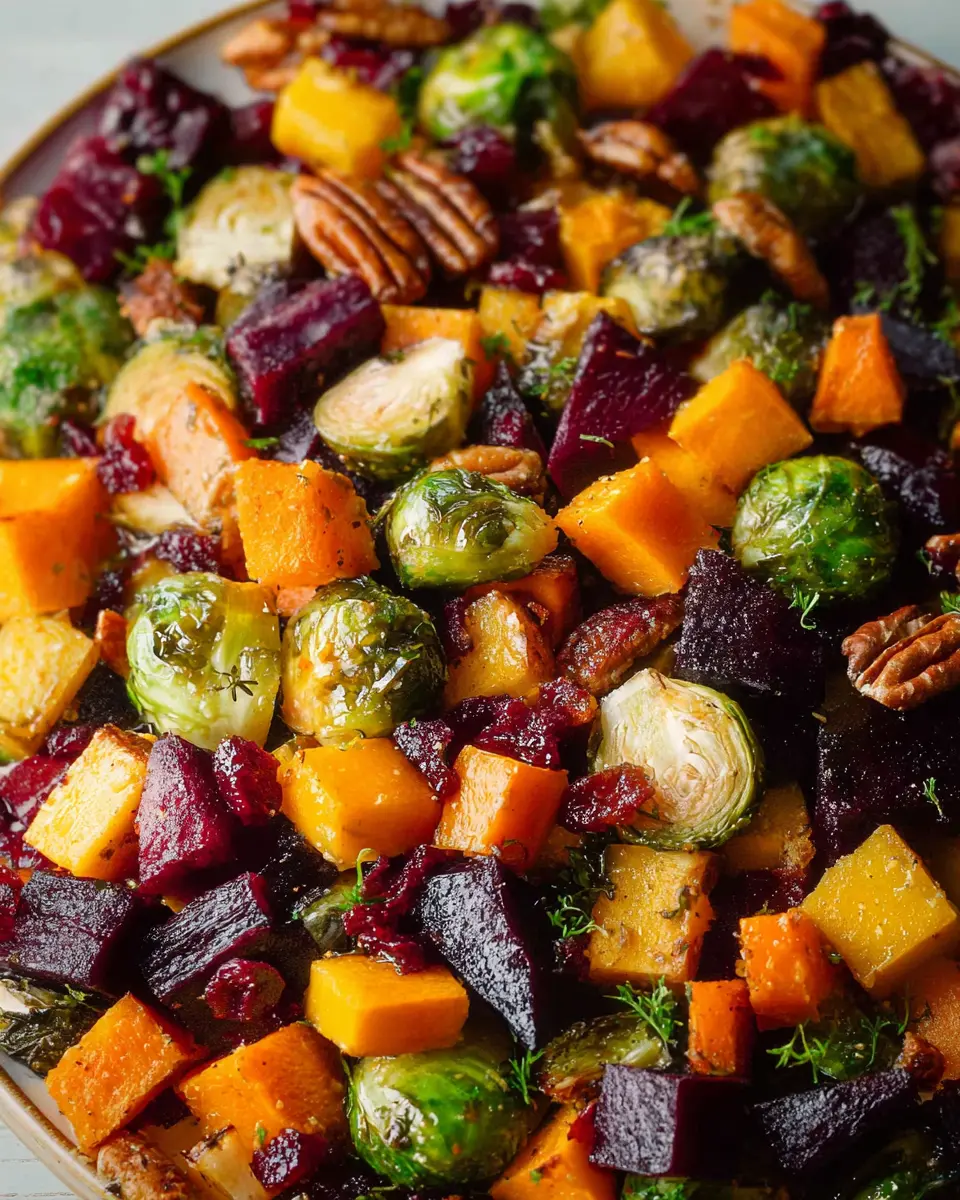
Ingredients for Winter Vegetable Salad
Creating a vibrant winter vegetable salad is all about selecting the right ingredients. Here’s how to prepare each key component for this delicious dish.
Roasted Brussels Sprouts
To add a delightful crunch and rich flavor, start with:
- 3 cups Brussels sprouts (trimmed and cleaned)
- 2 tablespoons olive oil
- Salt to taste
Roasting brings out their natural sweetness, making them a must-have in this salad.
Roasted Butternut Squash
For a creamy texture, you’ll need:
- 4 cups butternut squash (cubed)
- 2 tablespoons olive oil
- Salt to taste
Roasted butternut squash not only enhances the taste but also adds beautiful color.
Other Salad Ingredients
Your salad wouldn't be complete without these extras:
- 2 large beets (precooked for optimal flavor)
- 2 cups pecan halves
- 1 cup dried cranberries
These ingredients create a perfect balance of sweetness and crunch.
Dressing Options
Finally, drizzle with your choice of dressing:
- Balsamic Glaze: Made by reducing balsamic vinegar with honey.
- Maple-Lime Dressing: A delightful mix of maple syrup and lime juice.
Choosing your dressing can elevate this winter vegetable salad even further. For more tips, check out essential links such as How to Roast Butternut Squash. Enjoy the burst of flavors while staying cozy this winter!
Step-by-step Preparation of Winter Vegetable Salad
Creating a winter vegetable salad that's not only colorful but packed with flavor is easier than you might think! Follow this step-by-step guide to bring your salad aspirations to life.
Roast the Brussels Sprouts
Start by preheating your oven to 375°F. Grab your Brussels sprouts – about 3 cups should do – and trim the ends while removing any yellow leaves. Slice them in half and toss them in a bowl with 2 tablespoons of olive oil and salt to your liking. Now, lay them cut-side down on a parchment-lined baking sheet. Roast for about 20 to 25 minutes, turning them halfway through for that perfect caramelization. They should end up beautifully browned and tender. The amazing aroma will have your kitchen smelling fantastic!
Roast the Butternut Squash
While your Brussels sprouts are roasting, let’s move on to the butternut squash. You'll need 4 cups of peeled, seeded, and cubed squash. In a separate bowl, mix the squash with another 2 tablespoons of olive oil and a pinch of salt. Spread the seasoned squash on another parchment-lined baking sheet. Roast it at 375°F for 20-25 minutes, flipping once during cooking. You’re aiming for softness and a hint of golden color. Roasting both vegetables at the same time makes this process efficient—you can maximize the oven's potential!
Cook the Beets
Beets add not just flavor but a beautiful color to your winter vegetable salad. If you want to save some time, consider cooking your beets a day in advance. Simply boil 2 whole beets in a pot of water for about 30 to 40 minutes until they are tender. Once cooled, peel and dice them into small cubes. If you follow this method, their striking color won’t bleed too much into the salad later on!
Toast the Pecans
Moving on to the delightful crunch—pecans! Toasting them enhances their flavor. Preheat your oven to 350°F and lay your pecans in a single layer on a baking sheet. Toast for 5 to 10 minutes, keeping an eye on them so they don’t burn. Check them after the first 5 minutes; pecans can go from perfectly toasted to burnt in no time!
Assemble the Salad
Now comes the fun part: assembling your winter vegetable salad! In a large bowl, combine the roasted Brussels sprouts, butternut squash, toasted pecans, and dried cranberries. For the best presentation, sprinkle the diced beets on top, as they can color the salad vibrant red. Finally, dress your creation with either the sweet maple-lime dressing or the rich balsamic glaze, drizzling it just before serving for aesthetics.
And there you have it! A winter vegetable salad that’s not only nourishing but also eye-catching enough to liven up any winter table. Enjoy and share the joy of this seasonal dish with friends and family!
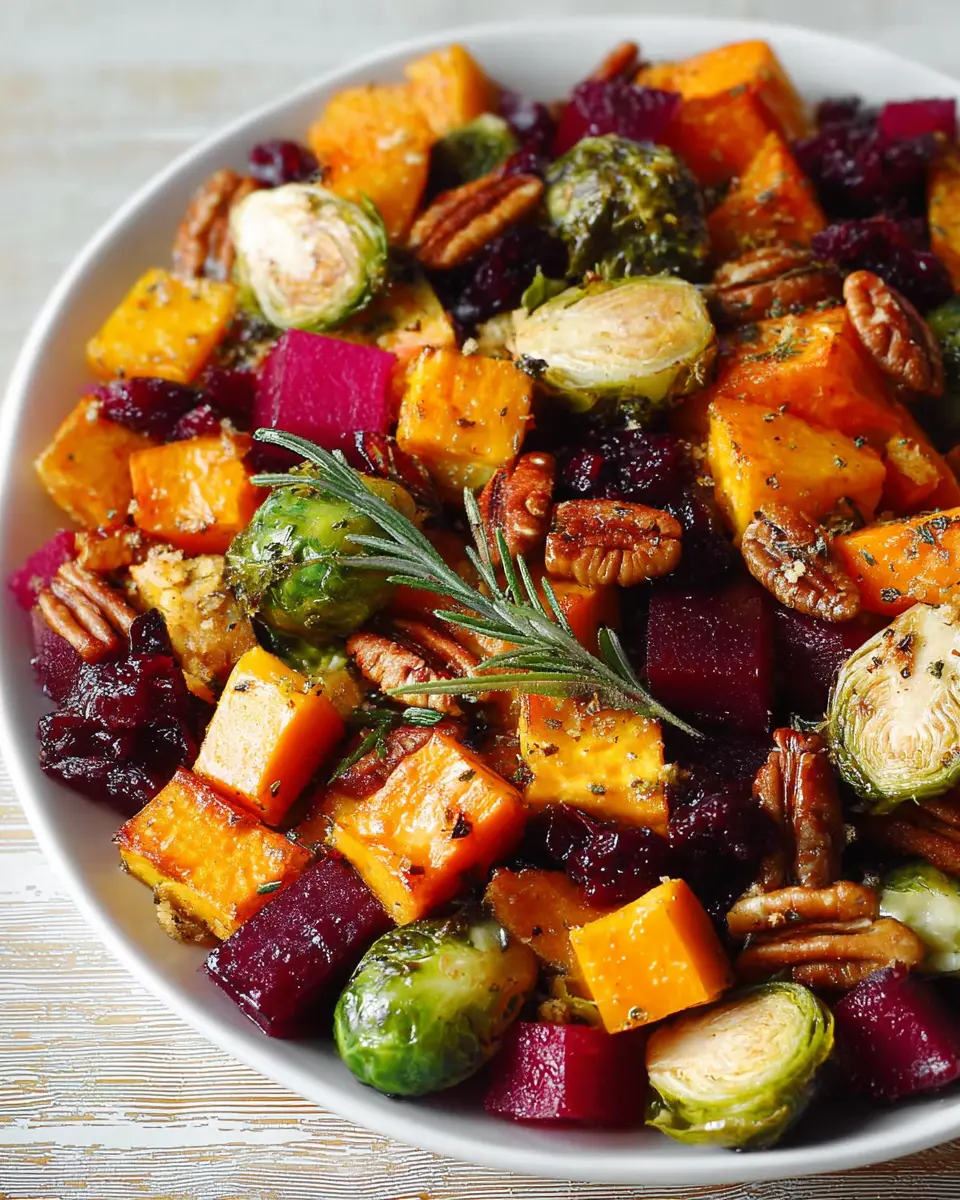
Variations on Winter Vegetable Salad
Add-ins: Nuts and Seeds
For added crunch and nutrition in your winter vegetable salad, consider incorporating various nuts and seeds. Toasted walnuts, sunflower seeds, or pumpkin seeds can elevate the flavor while providing healthy fats and protein. Simply toss in a handful to complement those roasted Brussels sprouts and butternut squash.
Dressing Swap
Feeling adventurous? Switch up the dressing! Instead of the traditional maple-lime dressing, try a creamy tahini dressing or a zesty lemon vinaigrette. Both options can enhance the natural flavors of the beets and squash, making your winter vegetable salad a delightful experience.
Seasonal Fruit Enhancements
Don’t forget to add seasonal fruits! Slices of crisp apples or juicy pomegranate seeds can brighten your winter vegetable salad and introduce a pop of sweetness. They offer a beautiful contrast to the earthiness of the roasted vegetables and add a nutritional boost.
For more salad inspiration, consider this guide to seasonal produce to discover what’s fresh in your market!
Cooking Tips and Notes for Winter Vegetable Salad
Pre-cooking Beets
Pre-cooking your beets at least one day ahead not only enhances their flavor but also minimizes color bleeding in your winter vegetable salad. Simply boil whole beets until tender, then cool and peel. This method allows you to preserve their vibrant color while ensuring they are perfectly soft and ready for your salad.
Roasting Tips for Brussels Sprouts and Squash
When roasting Brussels sprouts and butternut squash, make sure to spread them in a single layer on your baking sheets. This helps ensure even cooking. For extra flavor, try adding spices like garlic powder or smoked paprika to the olive oil before tossing with the vegetables.
Balancing Flavors in Dressings
A successful dressing for your winter vegetable salad should strike a balance between sweet, tangy, and savory. If you’re using maple-lime dressing, adjust the lime juice to match your taste preference. For a richer flavor, opt for high-quality aged balsamic vinegar which complements the earthy veggies beautifully.
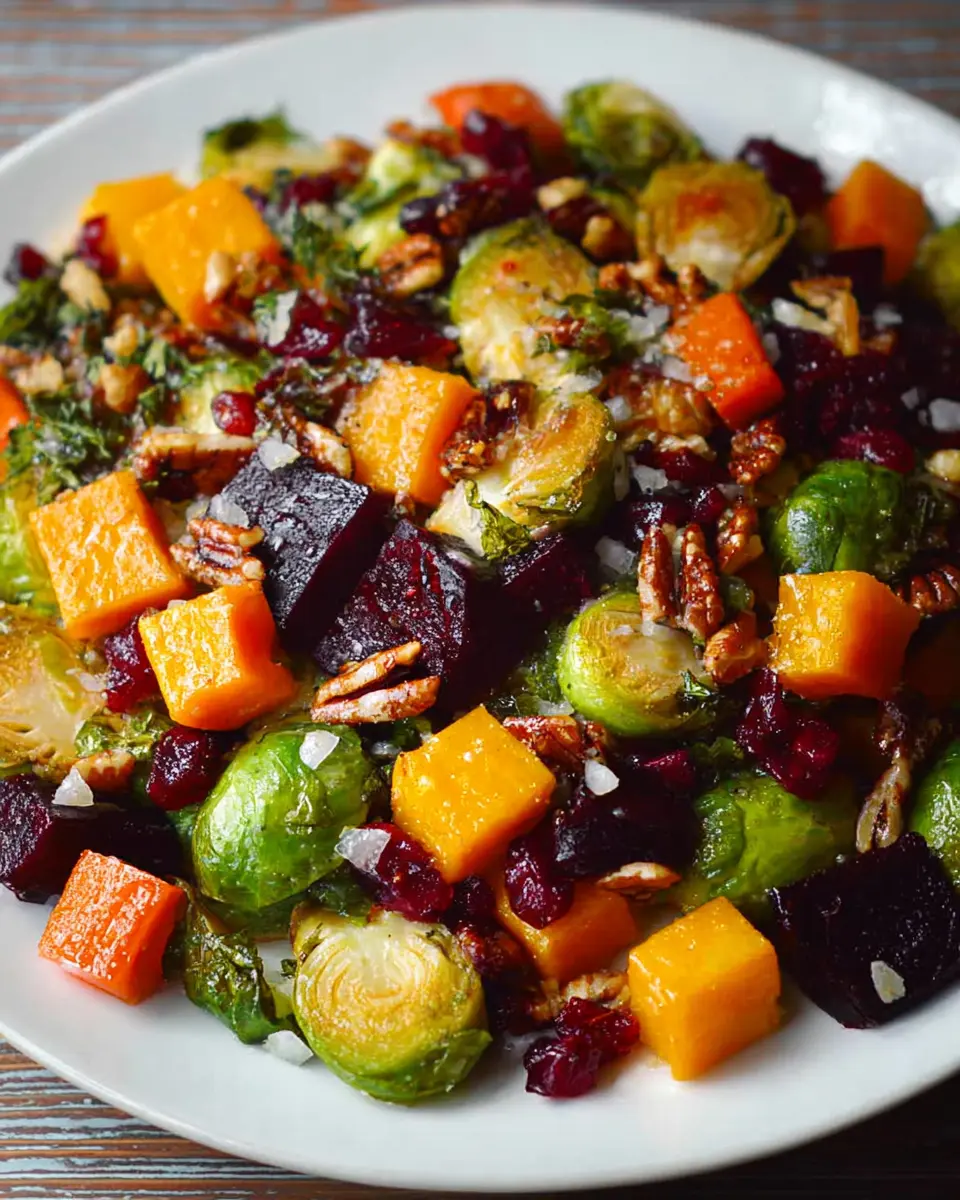
Serving Suggestions for Winter Vegetable Salad
Best Pairings with Proteins
Elevate your winter vegetable salad by pairing it with delicious proteins! Here are some tasty options to consider:
- Grilled Chicken: The warmth of grilled chicken complements the rich flavors of roasted vegetables perfectly.
- Turkey Bacon: Add crispy turkey bacon for a delightful crunch and smoky flavor.
- Chickpeas: For a plant-based twist, roasted chickpeas offer protein and a satisfying texture.
These choices will not only enhance the salad's flavors but also make for a well-rounded meal!
Presentation Tips for Gatherings
When serving your winter vegetable salad, presentation is key to making your dish truly shine:
- Layer It Up: Create height by layering the ingredients in a large glass bowl, showcasing the vibrant colors of butternut squash, Brussels sprouts, and beets.
- Garnish with Fresh Herbs: Sprigs of parsley or mint can add a pop of color and an aromatic touch.
- Serve Dressing on the Side: Offering your dressing separately allows guests to customize their salad, keeping the veggies crisp and fresh.
For more inspiration, check out this guide on salad presentation techniques. Enjoy creating your masterpiece!
Time Breakdown for Winter Vegetable Salad
Preparation Time
Preparing your winter vegetable salad takes about 30 minutes. This includes washing, peeling, and chopping your seasonal veggies, like butternut squash and beets. For a smoother process, consider cooking the beets a day ahead!
Cooking Time
The cooking time for roasting the Brussels sprouts and butternut squash is approximately 25-30 minutes. While they roast, you can multitask by toasting your pecans and preparing your dressing.
Total Time
In total, you’re looking at about 1 hour for this delightful winter vegetable salad, including prep and cook time. This means you’ll soon be enjoying a warm, hearty dish perfect for the winter months!
Whether you’re preparing it for a cozy dinner or a holiday gathering, this nutritious salad is sure to please! Need a guide on how to cook beets? Check out this resource for tips!
Nutritional Facts for Winter Vegetable Salad
Calories
This delicious winter vegetable salad packs approximately 350 calories per serving, making it a satisfying and nutritious choice for lunch or dinner.
Protein
With a good mix of plant-based proteins from pecans and Brussels sprouts, this salad provides around 10 grams of protein, contributing to your daily nutrient needs.
Key Vitamins and Minerals
Rich in vitamins, the salad supplies a healthy dose of Vitamin A, C, and K, along with essential minerals like potassium and magnesium. These nutrients support immune health and help maintain muscle function, making this a powerhouse of winter nutrition.
For more insight on the health benefits of vegetables, check out the USDA’s Nutrition Data.
FAQs about Winter Vegetable Salad
Can I make this salad ahead of time?
Absolutely! The winter vegetable salad can be prepped a day in advance, allowing the flavors to meld beautifully. Roast the Brussels sprouts and butternut squash, cook the beets, and toast the pecans ahead of time. Just combine everything and drizzle the dressing shortly before serving for the freshest taste.
What are the best storage practices?
To keep your salad fresh, store the components separately in airtight containers in the refrigerator. The roasted vegetables and pecans can be kept for about 3 to 5 days, while cooked beets last even longer. Just remember to toss in the dressing right before serving for optimal flavor and appearance.
How can I adjust the flavors of the dressing?
If you want to customize your dressing, consider adding a splash of orange juice for a fruity twist or a pinch of garlic powder for extra zest. Adjust the maple syrup or lime juice to achieve your desired sweetness and acidity—feel free to experiment until you find your perfect flavor balance!
Conclusion on Winter Vegetable Salad
In summary, this winter vegetable salad brings together the heartiness of roasted butternut squash, Brussels sprouts, and earthy beets, making it a perfect seasonal dish. With added crunch from pecans and a sweet dressing, this salad is not just nutritious but truly delightful. Enjoy this festive treat!
Winter Vegetable Salad with Butternut Squash, Brussels Sprouts, and Beets
Equipment
- baking sheet
- Medium bowl
- Saucepan
Ingredients
Roasted Brussels Sprouts
- 3 cups Brussels sprouts (raw, ends trimmed, yellow leaves removed)
- 2 tablespoons olive oil
- salt to taste
Roasted Butternut Squash
- 4 cups butternut squash (uncooked, peeled, seeded, and cubed into 1-inch cubes)
- 2 tablespoons olive oil
- salt to taste
Other Salad Ingredients
- 2 large beets (pre-cooked at least 1 day in advance)
- 2 cups pecan halves
- 1 cup dried cranberries
Balsamic Glaze
- 1 cup balsamic vinegar
- ¼ cup honey or brown sugar
Maple-Lime Dressing
- 4 tablespoons maple syrup
- 1 tablespoon freshly squeezed lime juice add 1 more tablespoon, to taste
Instructions
Roasting Brussels Sprouts
- Preheat oven to 375 F. Line the baking sheet with parchment paper.
- Trim ends of Brussels sprouts and remove yellow leaves. Slice all Brussels sprouts in half.
- In a medium bowl, combine halved Brussels sprouts, 2 tablespoons of olive oil, salt (to taste), and toss to combine.
- Place Brussels sprouts onto a parchment paper-lined baking sheet, cut side down, and roast in the oven at 375 F for about 20-25 minutes.
- During the last 5-10 minutes of roasting, turn them over for even browning.
Roasting Butternut Squash
- Preheat oven to 375 F. Line the baking sheet with parchment paper.
- In a medium bowl, combine cubed butternut squash, 2 tablespoons of olive oil, and salt, and toss to combine.
- Spread butternut squash in a single layer on the baking sheet. Bake for 20-25 minutes, turning once half-way through baking.
Cooking Beets
- Add 2 beets to a medium-sized saucepan filled with water. Bring to a boil.
- Boil the beets on medium heat for about 30 or 40 minutes until soft.
- Remove from heat, let them cool, peel the beets, and dice them into small cubes.
Toasting Pecans
- Preheat the oven to 350 F and line a baking sheet with parchment paper.
- Toast the pecans for about 5 to 10 minutes until they get darker in color.
Assembly
- In a large bowl, toss together roasted Brussels sprouts, roasted butternut squash, toasted pecans, and dried cranberries. Add diced cooked beets last.
Dressing
- For the maple-lime dressing, combine 3 or 4 tablespoons of maple syrup with 1 or 2 tablespoons of lime juice to taste.
- Drizzle with balsamic glaze only right before serving, if making ahead.



Leave a Reply